Best Balatro Decks Guide: Which Deck to Pick for Each Run Goal
A practical deck-selection guide for Balatro players who want to choose the right deck for learning, consistency, unlocks, high-score routes and calculator-backed blind planning.

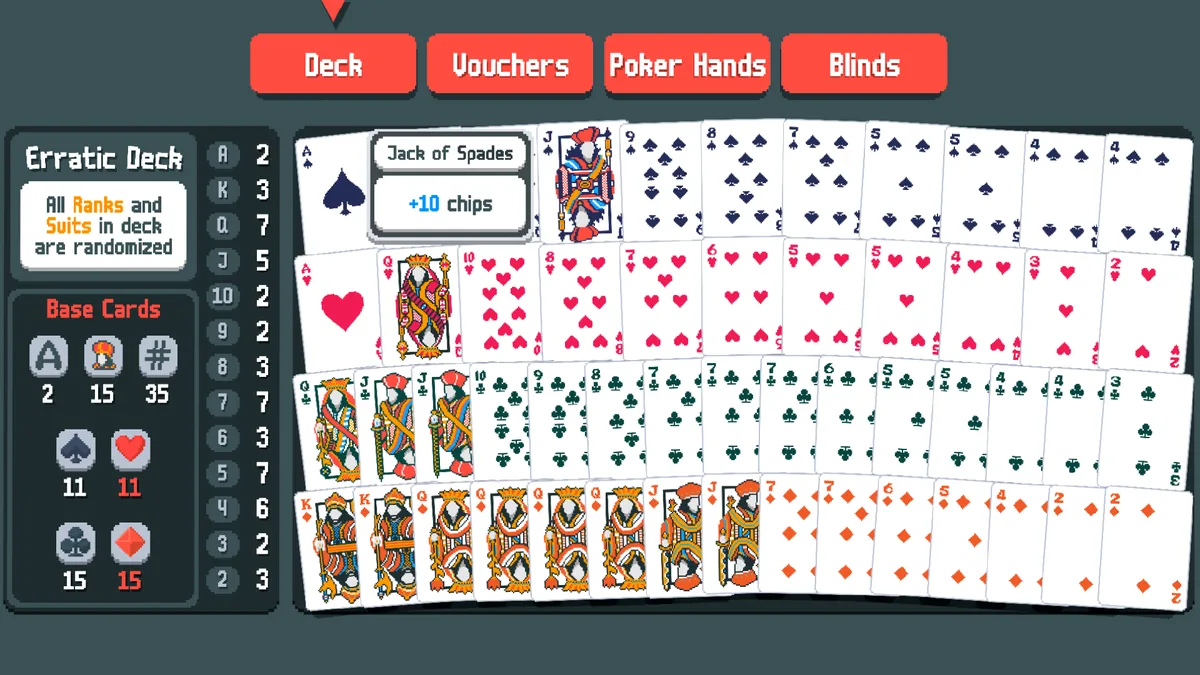
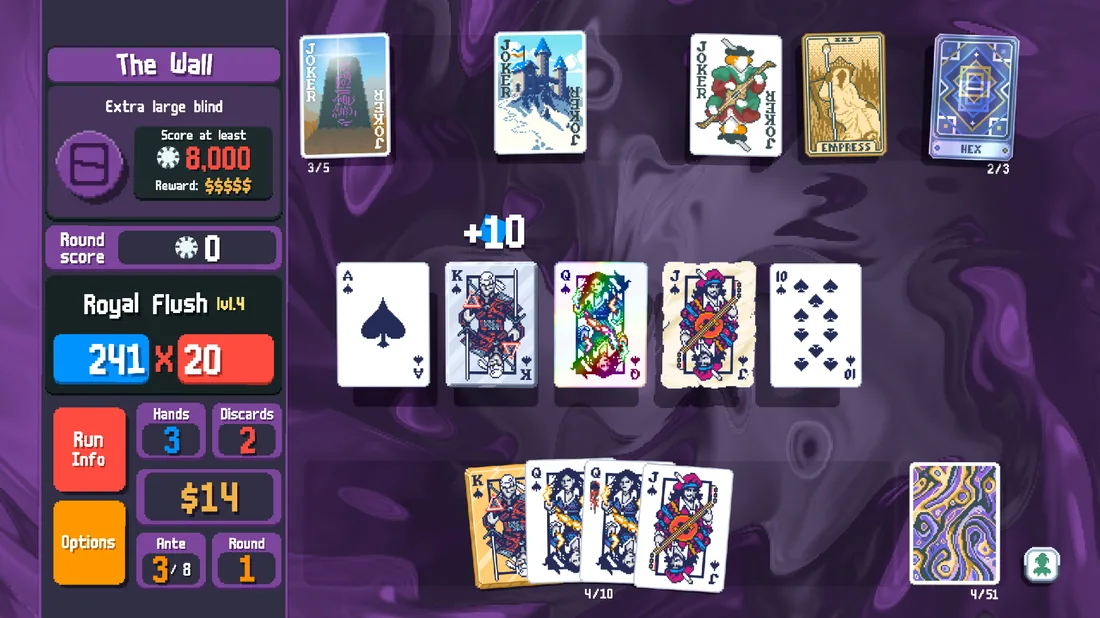
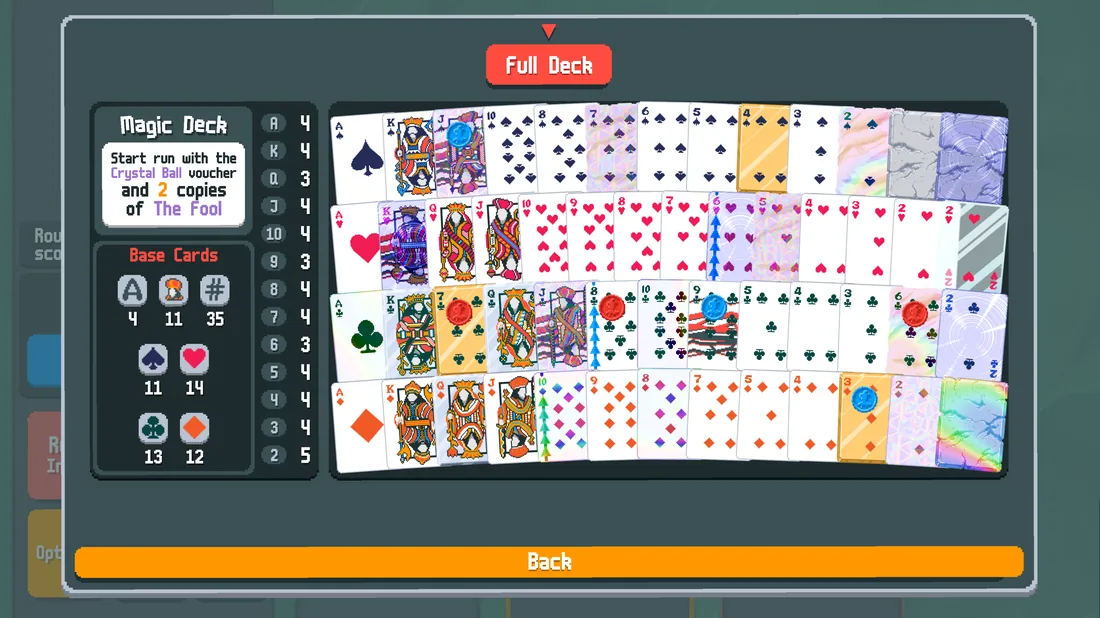
Players search for the best deck Balatro because deck choice changes the whole shape of a run before the first shop appears. Some decks make the early antes safer. Some decks create money, hand-size, discard, suit or scaling constraints. Others are built for experiments after you already understand how chips, +Mult, xMult, hand levels and Joker slots interact. This guide treats decks as route choices instead of a fixed universal ranking.
Quick Answer: What Is the Best Balatro Deck?
For most players trying to clear Ante 8, the best Balatro deck is the deck that gives early consistency without forcing a complicated route. Red Deck and Blue Deck are comfortable learning decks because the extra discard or hand gives more room to recover from awkward draws. Yellow Deck is excellent when you know how to convert starting money into stronger early shops. Checkered Deck is one of the easiest decks for focused Flush routes because the suit structure makes the plan obvious.
For experienced players, the answer changes. Ghost Deck is powerful for Spectral-card routes and unusual Joker setups. Plasma Deck changes score evaluation because chips and Mult are balanced, so normal instincts can mislead you. Erratic Deck can produce exciting starts, but it is less reliable because the card distribution can help or hurt the route before you have enough control.
A useful ranking should therefore answer a smaller question: best deck for what? If the goal is learning, choose a forgiving deck. If the goal is a specific challenge, choose the deck that teaches that constraint. If the goal is a high-score experiment, choose a deck whose upside matches your scoring engine and then test the next blind with a calculator before you sell stable pieces.
The safest default recommendation is simple: learn with Red, Blue or Yellow; practice focused hand routes with Checkered or Abandoned; test advanced scaling with Ghost, Plasma or Erratic only after the basic scoring loop feels predictable.
Default pick
If you are unsure, pick a forgiving deck first. A deck that keeps the run alive long enough to learn is better than a flashy deck that only shines after several perfect shops.
Best Balatro Decks by Run Goal
A deck tier list is most useful when it is tied to a goal. The same deck can be excellent for one route and awkward for another. Checkered Deck is very clear when the route wants Flushes, but it does not automatically solve Joker order, money or xMult scaling. Yellow Deck can feel stronger than a fancy deck because the starting cash creates more early options, but that value disappears if the money is spent without a scoring plan.
When comparing decks, look at four practical variables: early safety, shop flexibility, hand consistency and late-game ceiling. Early safety means the deck helps before the first real danger point. Shop flexibility means it gives enough money, hand or discard room to buy the right fix. Hand consistency means it makes the hand you want easier to find. Ceiling means the deck can still support a strong engine after the easy early value is gone.
Use the table as a decision map, not a permanent ranking. A player chasing a Gold Stake clear, a seed tester and a beginner learning hand levels should not all pick the same deck for the same reason.
| Goal | Decks to consider | Why they fit |
|---|---|---|
| Learning the game | Red, Blue, Yellow | Extra recovery or money makes mistakes less punishing while you learn shops, hands and Joker order. |
| Consistent Ante 8 clear | Blue, Yellow, Checkered | They support reliable early decisions and give a clearer route to score before blinds spike. |
| Flush-focused practice | Checkered | The simplified suit structure turns many draw and discard decisions into a focused plan. |
| Advanced scoring experiments | Ghost, Plasma, Erratic | They offer unusual upside, but the route should be checked because normal score intuition can fail. |
| Deck-learning challenge | Abandoned, Painted, Zodiac | These decks teach constraints around face cards, hand size, shop economy and route commitment. |
Best Beginner Decks: Red, Blue, Yellow and Checkered
Red Deck is friendly because the extra discard gives new players more chances to fix a weak hand. That matters while you are still learning when to chase a Flush, when to settle for a Pair, and when to keep a scoring hand instead of digging too far. Extra discard does not create score by itself, but it reduces the number of runs that fail because one draw went wrong.
Blue Deck is equally practical because an extra hand gives more attempts to reach the blind target. This is useful when you are learning how much score a hand actually produces. If a blind is close, the extra hand can buy enough time to let a modest Joker package work. It also pairs naturally with calculator checks because you can compare whether a route needs one more strong hand or a stronger multiplier engine.
Yellow Deck teaches shop discipline. Starting with more money is powerful only if it turns into useful decisions: a stable scoring Joker, an early economy engine, a meaningful pack, or enough interest to keep the next shops flexible. If you spend the extra cash on speculative pieces that do not beat the next blind, Yellow loses its main advantage.
Checkered Deck is the easiest focused deck to understand because it strongly points toward Flush planning. It helps players see why consistency matters: if a deck shape makes one hand easier to find, Planet levels, Tarot choices and discard decisions can all support the same plan. The risk is overcommitting to Flush when the shop offers a stronger alternative engine.
Beginner rule
Pick Red or Blue if you want recovery, Yellow if you want shop practice, and Checkered if you want a simple hand-focused lesson.
How to Think About Unlocking Decks
Deck unlocks are a progression path, but they should not be treated as a race to the strangest option. Each new deck asks you to learn a different constraint. Some change starting resources. Some change the deck list. Some change shop or consumable expectations. If you unlock several decks quickly, spend a few normal runs understanding what each one changes before judging it from one lucky or unlucky attempt.
A good unlock route starts with stable clears. Use forgiving decks to build confidence, then branch into decks that teach a specific skill. If a new deck removes face cards, changes suit distribution, changes hand size or points toward spectral effects, ask what problem the deck is trying to make you solve. That question is more useful than asking whether the deck is S-tier in a vacuum.
When you move into advanced decks, write short notes. Record the first shops, the hand you leveled, which Joker carried the early score, and where the run became unsafe. These notes make it easier to decide whether the deck itself was weak or whether the route needed a different shop decision.
Calculator Checks Before You Commit to a Deck Route
The deck does not win the run alone. It creates conditions for a route, and that route still has to beat blind targets. Use the build calculator when you know the main hand type, hand level, bonus chips, +Mult, xMult and Joker slot pressure. This is especially useful on Plasma Deck, where balancing changes how chips and Mult should be valued.
Use the odds calculator when a deck encourages a narrow draw plan. Checkered Deck, suit-focused Tarot decisions and rank-focused routes can all look safer than they are if you do not count outs. If the route dies when one specific hand fails to appear, the deck may be exciting but not reliable enough for the goal you chose.
Use the Joker calculator or Joker order guide when the deck gives you enough room to build a scoring engine but the order is unclear. Deck choice can make the early route easier, but Joker order determines whether the score lands before the blind target. Copy effects, retriggers, Baron-style hands, Mime interactions and xMult placement all deserve a separate order check.
| Question | Use this tool | Decision it supports |
|---|---|---|
| Will this build clear the next blind? | Balatro Build Calculator | Compare chips, +Mult, xMult, hand level and Joker slots before buying or selling. |
| Can this deck find the hand often enough? | Balatro Odds Calculator | Estimate draw and discard risk for Flush, Straight, rank or suit plans. |
| Does Joker order change the result? | Joker Calculator / Order Guide | Check copy, retrigger and xMult order before close blinds. |
Common Mistakes When Choosing a Balatro Deck
The biggest mistake is treating a deck as a guaranteed strategy. A deck creates a starting condition; the shop decides whether that condition becomes a real build. If the shop gives you a strong scoring direction, follow the run in front of you rather than forcing the deck stereotype forever.
Another mistake is judging a deck from one run. Erratic starts, rare Joker timing and early pack luck can distort the experience. Test a deck across several attempts and record where it helped: money, draw consistency, scoring ceiling, or route clarity. If you cannot name the advantage, the deck may not fit your current goal.
Finally, do not ignore blind safety while chasing unlocks or high-score screenshots. If a deck is fun but repeatedly reaches the same danger point, use the calculator tools to identify whether the problem is chips, +Mult, xMult, hand level, draw odds or Joker slots. Then choose a deck that solves that problem earlier.
- Forcing one hand type: A deck may suggest a plan, but a strong shop can justify a pivot.
- Spending starting money too fast: Yellow-style value disappears when early cash does not buy score, consistency or future flexibility.
- Overrating late-game upside: A powerful ceiling does not matter if the first three antes are unstable.
- Skipping score checks: Deck confidence is not the same as knowing whether the next blind target is safe.
Conclusion: Pick the Deck That Solves the Next Problem
The best Balatro decks are best for specific jobs. Red and Blue are forgiving learning decks. Yellow rewards shop discipline. Checkered makes focused Flush practice easier. Ghost, Plasma and Erratic create higher-variance experiments for players who already understand the scoring loop. Abandoned, Painted, Zodiac and other constraint decks are useful when you want to learn a particular route problem.
Before starting a run, name the goal and the next likely bottleneck. If the goal is learning, choose safety. If the goal is a clear, choose consistency. If the goal is a high-score route, choose upside only when you can test the score and draw risk. Deck choice becomes much easier when it is tied to a practical route instead of a universal tier list.
Best Balatro Decks FAQ
References and useful resources
About the Author
Balatro Calculator Team
The Balatro Calculator Team builds fan-made score, odds and Joker-order tools for players who want to understand scoring interactions before committing to a hand, shop purchase, seed route, deck choice or rare Joker plan.
Last updated: June 30, 2026