Balatro Card Enhancements Guide: Every Effect, Seal and Edition Explained
A practical reference for enhanced playing cards, the modifiers that stay separate from seals and editions, and the build decisions that make a card worth keeping.

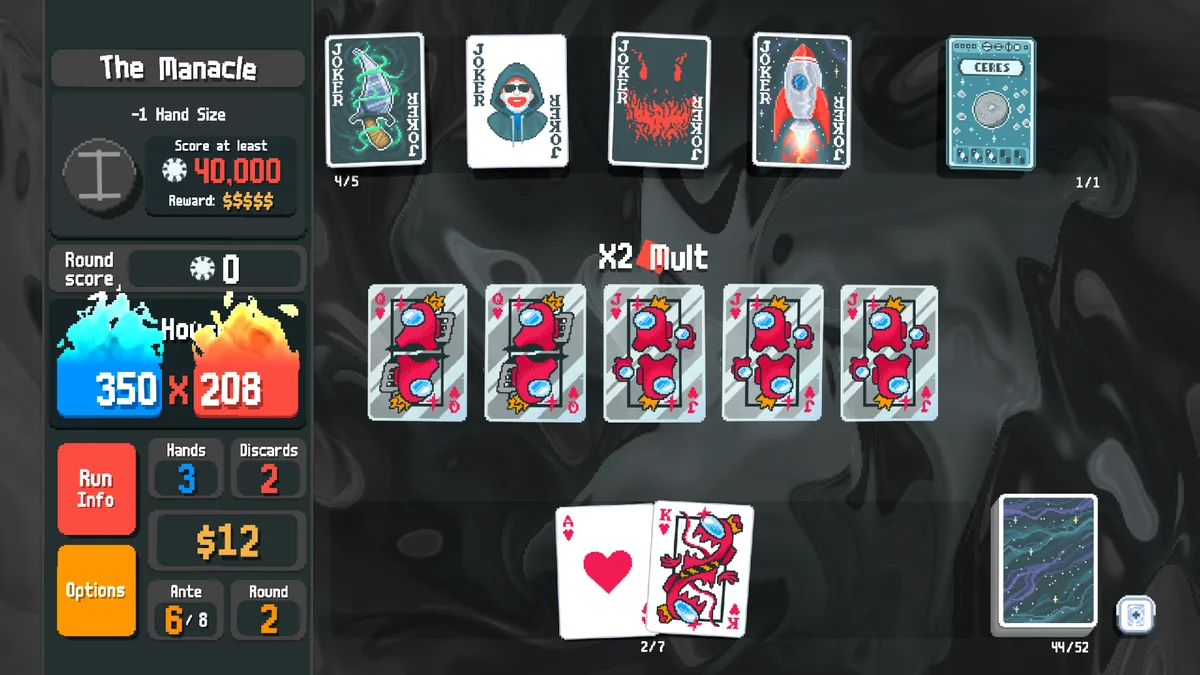
Balatro card enhancements are modifiers attached to individual playing cards. They change what happens when a card is scored, held in hand, or used as part of a run, so they are different from Joker effects and different from the hand-level bonuses provided by Planet cards. If you are searching for enhanced cards in Balatro, the useful first question is not simply which effect is strongest. Ask whether your build needs more Chips, more Mult, suit flexibility, held-card value, money or a safer way to reach the next blind. This guide lists all eight standard enhancements, explains how seals and editions fit beside them, and gives a short decision process for keeping, buying or replacing a modified card.
What Balatro card enhancements do
An enhancement is a property of a playing card. It travels with that card through your deck and can interact with the way you score a hand. Some enhancements matter when the card is played, some matter while it remains in your hand, and some add a conditional economy or probability effect. That timing is the first thing to check before calling a card good or bad.
Enhancements also occupy a different layer from a card's suit, rank, seal and edition. A single card can combine several layers when the run allows it. For example, a card can have an enhancement and a seal, while an edition changes the scoring or value of the card in another way. Treating every modifier as the same category is a common reason players misread a shop offer or overestimate a combo.
The practical value is build-dependent. A Steel Card can be excellent in a hand that leaves high-value cards held, but it is less useful when every card must be played. A Wild Card can rescue a flush route, but it can also become a liability against a suit-debuffing Boss Blind. Read the modifier together with the next blind, your hand size, your discard plan and your Joker order.
Check timing before raw strength
Played-card effects, held-in-hand effects and end-of-round effects solve different run problems. Match the timing to the hand you actually play.

All eight Balatro card enhancements
The table below is the fast reference. The important distinction is whether the value is immediate, conditional or tied to keeping the card in your hand. The exact result can still change with Jokers, seals, editions, deck rules and Boss Blind effects, so use the table as a decision aid rather than as a promise that one modifier wins every run.
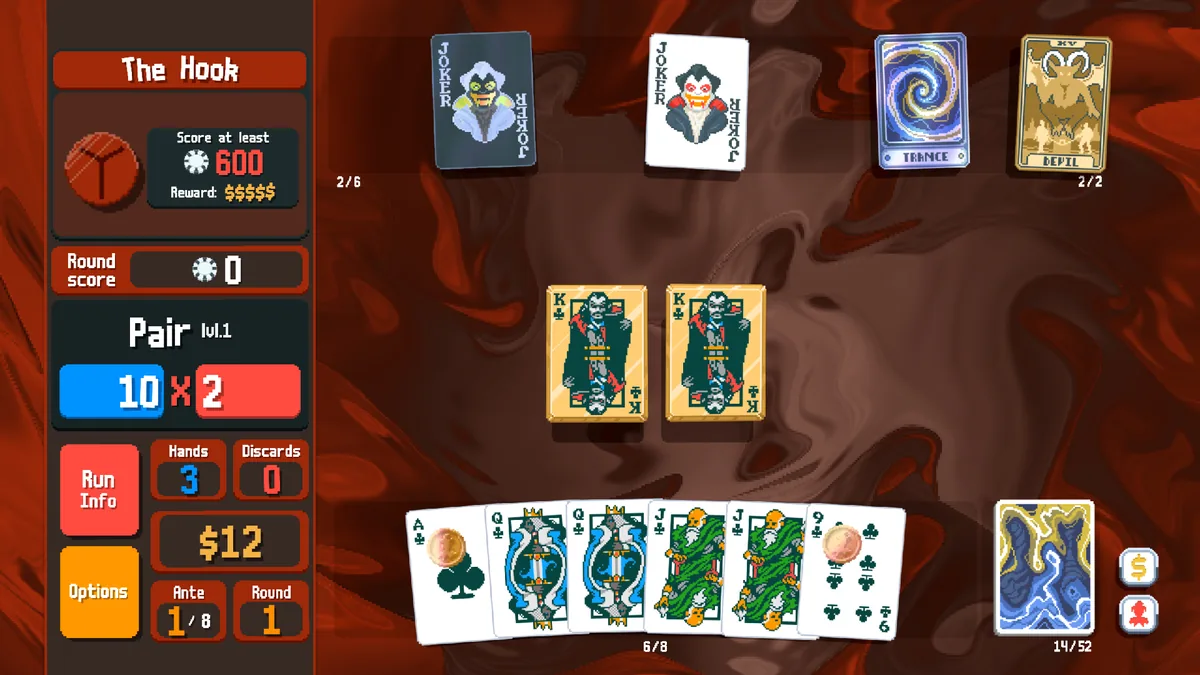
Bonus and Mult Cards are the cleanest early-run upgrades because they add value when the card scores. Wild, Glass and Lucky Cards have more visible upside but ask you to accept a condition or risk. Steel, Gold and Stone Cards are often about deck architecture: they reward a held-card plan, economy plan or a scoring line that can use a card without needing its normal rank and suit.
| Enhancement | Main effect | Best fit | Main risk |
|---|---|---|---|
| Bonus Card | +30 Chips when scored. | Early scoring, chip gaps and hands that play the card reliably. | The flat bonus can fall behind once the run scales. |
| Mult Card | +4 Mult when scored. | Builds that already have a strong chip base and need more multiplier. | A small flat Mult bonus may not justify a weak card or bad draw. |
| Wild Card | Counts as any suit. | Flush routes, suit-specific triggers and decks with awkward suit access. | Suit debuffs can turn the flexibility off at the worst time. |
| Glass Card | Scores for x2 Mult, with a chance to destroy after scoring. | High-ceiling hands, temporary burst lines and runs with replacement access. | The destruction chance makes it dangerous as the only copy of a key card. |
| Steel Card | Provides x1.5 Mult while held in hand. | High Card, held-card engines and hands that leave Steel cards unplayed. | Playing the card removes the held-in-hand value for that hand. |
| Stone Card | +50 Chips and no rank or suit. | Chip-focused builds, flexible filler and hands that do not need the card's identity. | It cannot fill rank- or suit-dependent poker requirements normally. |
| Gold Card | Pays $3 at the end of the round if held in hand. | Economy routes and runs that can protect a card without playing it. | The money arrives later and the card may reduce immediate scoring options. |
| Lucky Card | Separate chances for a Mult payout and a money payout. | Runs that can tolerate variance and benefit from extra upside over many plays. | A miss is normal; do not plan a blind around a lucky result. |
How to choose an enhancement for your build
Start with the resource your next blind is missing. If the calculator shows that your hand clears the target but lacks Chips, Bonus or Stone may be more useful than another small Mult effect. If Chips are already high and the final multiplier is the bottleneck, a Mult Card or a multiplier-focused edition can make the same hand safer. This is why a universal tier list is less useful than a quick score check with your actual hand level and Joker order.
Suit and rank requirements deserve a separate check. Wild Cards can make a flush route easier, but they do not erase every other rule that can debuff or restrict a suit. Stone Cards remove rank and suit identity, which is powerful for some High Card lines but awkward when your plan needs pairs, straights, flushes or rank-based Jokers. A card that looks like a downgrade can be correct when the build wants a neutral scoring body.
For held-card effects, ask whether the card can stay in your hand without breaking the hand you need to play. Steel and Gold are strongest when the run has enough hand size, draw quality and redundancy to preserve them. If the next Boss Blind reduces hand size or makes the first draw hidden, the theoretical held-card value should be discounted. A modifier is only valuable when the route can keep it active.
- Chip gap: Choose Bonus or Stone when the hand is Mult-heavy but misses the blind because the chip total is too small.
- Multiplier gap: Choose Mult, Glass or a compatible edition when the chip base is already safe and the final Mult is fragile.
- Suit access: Choose Wild when it creates a real flush or suit-trigger route, not merely because the card looks flexible.
- Held-card plan: Choose Steel or Gold only when hand size and draw quality let the card remain protected without lowering your legal scoring hand.
- Variance budget: Choose Lucky or Glass when the run has enough replacement, economy or score buffer to survive a miss or loss.
Enhancements vs seals vs editions
A seal is not the same thing as an enhancement. Red Seal, Blue Seal, Gold Seal and Purple Seal are separate card properties with their own triggers. A card with a seal may also have an enhancement, which is why the categories are easy to confuse. When a question asks whether cards with seals count as enhanced cards, the safe answer is no: the seal is an additional modifier, not one of the eight standard enhancements.
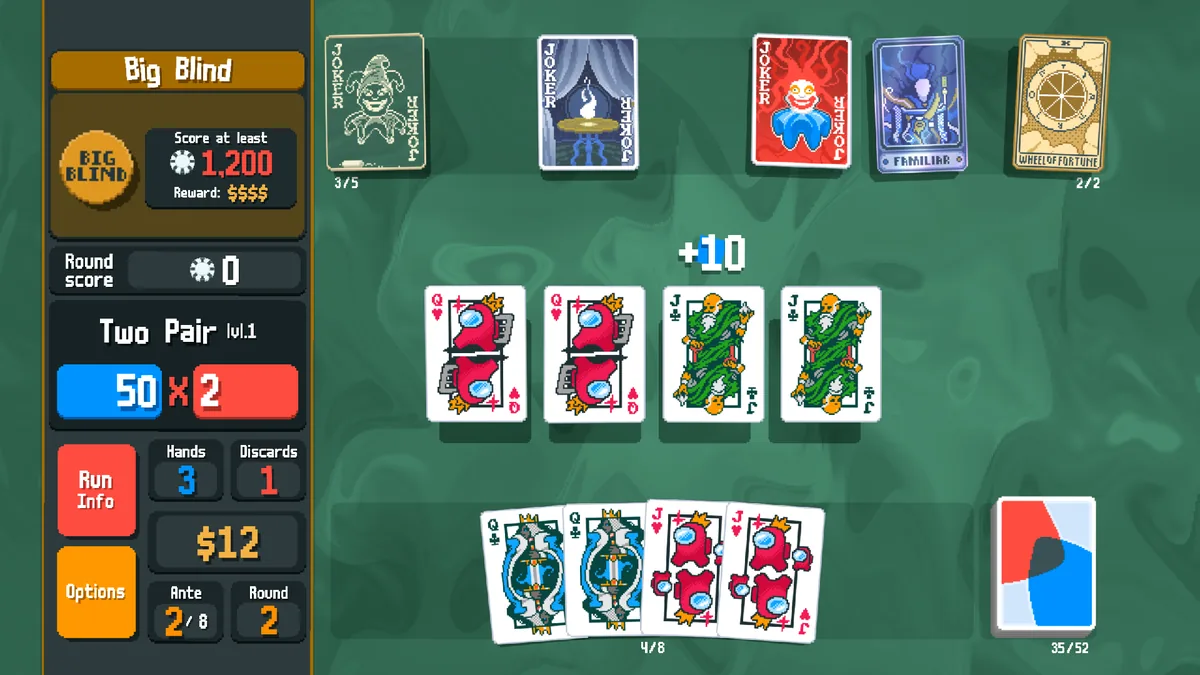
Editions are another separate layer. Foil, Holographic and Polychrome change the card's scoring value, while negative edition rules affect Joker space rather than the playing card itself. The visible screenshot in this guide is useful for recognizing that a card can show more than one visual signal, but do not infer every rule from the artwork. Check the actual card text and the effect timing.
This distinction matters for route planning. If you are building around Red Seal retriggers, the enhancement tells you what the card does when it scores while the seal tells you what extra trigger it creates. If you are comparing a Holographic card with a Mult Card, you are comparing different modifier layers, not two names for the same effect. Keep the layers separate in your notes and calculator inputs.
| Layer | Examples | What to ask |
|---|---|---|
| Enhancement | Bonus, Mult, Wild, Glass, Steel, Stone, Gold, Lucky | Does the card help when played, held or at the end of the round? |
| Seal | Red, Blue, Gold and Purple Seal | What extra trigger happens, and does a retrigger or discard make it happen again? |
| Edition | Foil, Holographic and Polychrome | Does the edition change Chips, Mult, xMult or Joker capacity for this route? |
| Card identity | Rank, suit and deck-specific state | Does the card still satisfy the hand, suit and Joker condition I need? |
How to get enhanced cards in Balatro
The most visible route is through Tarot cards and Arcana Packs. Tarot effects can modify cards, change suits or ranks, remove cards, and reshape a deck around the current run problem. The right pick depends on whether you are fixing a weak draw, adding a scoring modifier or preparing for a later Boss Blind. Do not buy an Arcana Pack only because it contains a flashy option; compare the immediate upgrade with the cost of delaying a Joker, Planet card or card removal.
Shop cards, packs and run-specific effects can also create opportunities to add or discover modified cards. The exact source is less important than the follow-up question: will the card be played often enough, held safely enough or protected by enough redundancy to repay the cost? A Gold Card that never stays in hand is not an economy engine, and a Glass Card that is your only scoring copy may be too risky even when its ceiling is attractive.
Before changing the deck, record the next blind and the hand you are trying to repeat. Then check whether the new enhancement improves that line or only improves a hypothetical future line. The best enhancement route usually solves a known bottleneck and leaves enough space for the next shop decision.
- Read the current run: Identify the hand, suit, chip, Mult or economy problem before taking a modifier.
- Check the next blind: A Wild or held-card plan can change value when a Boss Blind debuffs a suit, reduces hand size or hides information.
- Protect the only copy: Do not sacrifice your only legal scoring card for a high-ceiling effect unless you have a replacement route.
- Price the opportunity cost: Compare the pack or shop purchase with a Joker, Planet card, removal, reroll or interest threshold you are giving up.
A calculator-backed decision workflow
Use a three-pass check before committing a modified card to the deck. First, verify legality: can the hand still be made with the card's rank, suit, seal and enhancement? Second, verify timing: is the effect active when the card is played, held, retriggered or scored? Third, verify the result with the actual Chips, Mult, hand level, Jokers, editions and Boss Blind restrictions that will apply in the round.
For Glass, Lucky and other high-variance choices, calculate the ordinary result rather than the best screenshot. A Glass Card can be the correct burst tool when the score buffer is large and replacement is available, but it is a poor foundation when one destroyed card ends the run. The same rule applies to Lucky: treat the payout as upside, not as the minimum score you need.
A score calculator cannot see every hidden state of a live run. Enter the final values after card modifications and Joker order are settled, then compare the modified line with one fallback. If the new card only wins when a single draw, retrigger or random check succeeds, keep an alternative route before entering the blind.
- Legality first: Confirm rank, suit, hand type and Boss Blind rules before comparing numbers.
- Timing second: Mark whether the modifier triggers on play, while held, after scoring, on discard or at round end.
- Final values: Use post-enhancement Chips and Mult, the real hand level and the final Joker order.
- Fallback line: Check one practical backup hand or replacement plan before spending the last resource.
Common mistakes and a quick checklist
The most common mistake is treating every visible modifier as a permanent scoring bonus. Steel and Gold need the card to remain held, Glass can disappear, Lucky can miss, and Wild does not make a run immune to suit-based restrictions. The second mistake is comparing an enhancement outside the hand it is meant to support. A +4 Mult effect may be excellent in one build and irrelevant in another that already has more Mult than Chips.
Another mistake is ignoring the next shop. A modified card can be correct for the current blind but wrong for the route if it occupies a slot that should be used for a reliable scoring card, a removal or an economy piece. Keep a small score buffer, protect your only legal hand and avoid paying for variance that the run cannot afford.
Use this short checklist whenever a pack or shop offers a modified card. If the answer to two or more questions is no, leave the card or take it only as a deliberate experiment rather than as the foundation of the run.
- Does it solve today's bottleneck?: Name the missing resource: Chips, Mult, suit access, economy, draw quality or redundancy.
- Is the timing reliable?: Check whether the card is usually played, held or discarded in the line you actually use.
- Can the next blind break it?: Review suit debuffs, hand-size changes, hidden draws, forced cards and one-hand limits.
- Do I have a fallback?: Keep another scoring route when the modifier can miss, destroy a card or depend on a single trigger.
- What am I giving up?: Compare the purchase with the next Joker, Planet, removal, reroll or interest threshold.
Balatro Card Enhancements FAQ
References and media sources
About this guide
Balatro Calculator Team
The Balatro Calculator Team builds fan-made score, odds and Joker-order tools for players who want to understand a run before committing a hand, a discard, a shop purchase or a card modifier.
Last updated: August 18, 2026