Balatro Ante Guide: Scores, Blinds & Endless Mode
A practical route through the three blinds in every Ante, the score checkpoints that matter, and the build decisions that keep a run alive through Ante 8.


A useful Balatro ante guide answers two questions at the same time: what must you beat in this Ante, and what must your build become before the next one? A standard run has eight Antes. Each Ante contains a Small Blind, a Big Blind and a Boss Blind, although you can skip a Small or Big Blind for a Tag. The Boss cannot be skipped. This guide keeps the focus on Ante progression, so it complements the Boss Blinds, Stakes, Shop Strategy and Decks guides rather than repeating them.
What an Ante Contains
An Ante is a three-round checkpoint. This Balatro ante guide treats the Small Blind as the first scoring test, the Big Blind as the requirement check, and the Boss Blind as the rule change that can attack your suit, hand, hand size, Joker order or economy. Clearing the Boss advances the run to the next Ante. Losing any selected blind ends the run, so a flashy score is less useful than a repeatable score floor.
Skipping a Small or Big Blind gives a Tag instead of the normal round rewards. That can be correct when a Tag solves a clear problem, but skipping also removes hands, discards, shop income and opportunities to see a Planet or useful card. Ask what the next shop and the next score target need before taking the shortcut.
Read the Boss warning before you spend. If it disables a suit, locks a hand type or forces a large score, treat the Boss as the real end of the Ante. The two earlier blinds are your chance to earn money, test the build and enter the final round with a fallback rather than a single fragile line.
Plan around the Boss
The Ante is won by the build that survives its rule change, not only by the hand with the largest screenshot number.
| Stage | Normal role | Planning question |
|---|---|---|
| Small Blind | Low-risk score and income | Can I clear it while preserving hands and discards? |
| Big Blind | Higher target and a shop check | What does the next Boss remove from my build? |
| Boss Blind | Rule change plus score target | Do I have a legal primary hand and a fallback? |
Ante 1-2: Build a Floor Before You Chase a Ceiling
The first two Antes are for finding a reliable scoring engine. In this Balatro ante guide, the early goal is to clear the earliest Small and Big Blinds with a repeatable floor, not to chase a narrow high-roll effect. Buy or keep a Joker that adds Chips, Mult, a repeatable trigger or economy before you spend on a speculative combo. Your goal is a score that wins ordinary hands while the deck is still changing.
Cash is part of the plan. Holding around $25 reaches the usual base interest cap, but that is a guideline rather than a rule. A $6 card that prevents an Ante 2 loss is worth more than one future dollar of interest. Conversely, a speculative pack that leaves no money for a scoring Joker can make the next Boss impossible. Use the Shop Strategy Guide when the question is specifically buy, reroll or save.
Choose a hand you can draw, not only a hand you can imagine. Pairs, two pair and high card lines are often easier to repeat than a perfect early straight or flush. Planet cards can support the hand you actually play, while a card that needs three future pieces should wait until the run has enough consistency.
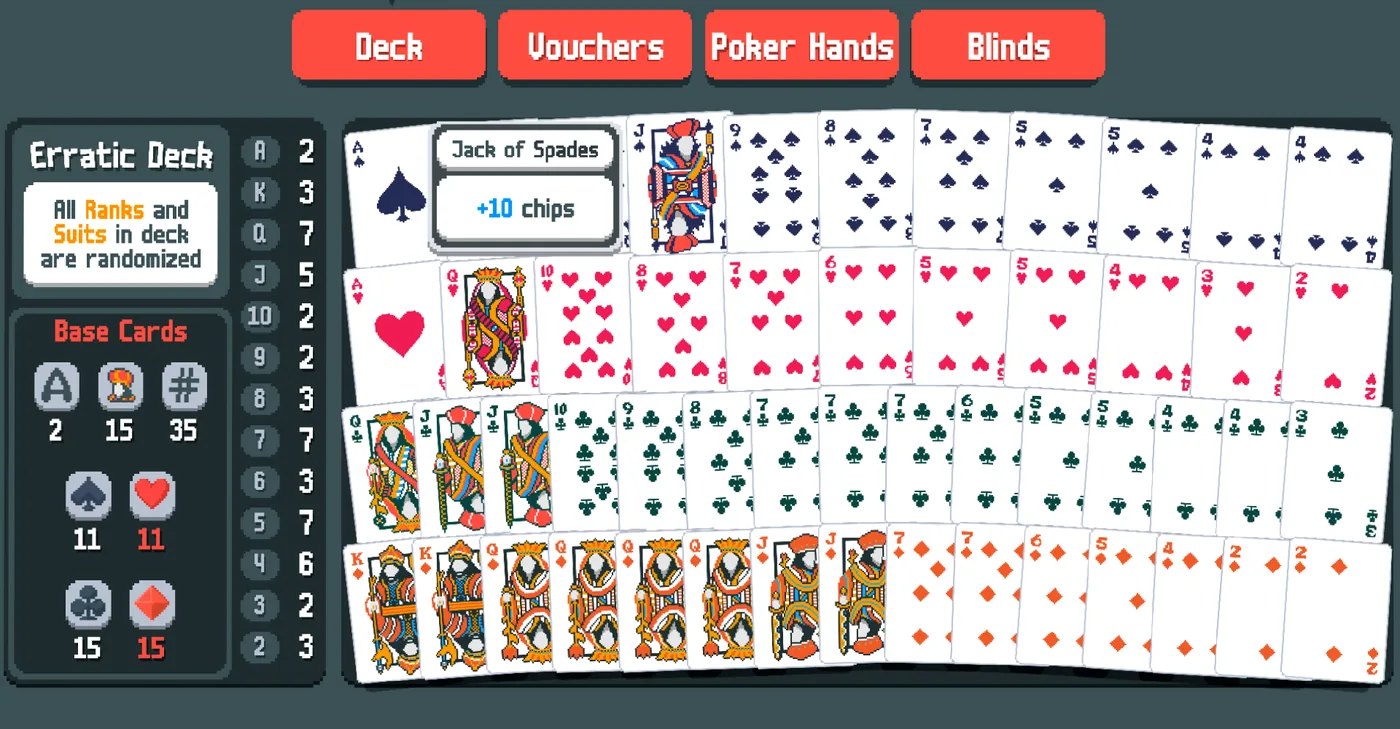
- Find one floor: Secure a repeatable Chips or Mult source before adding a fragile combo.
- Keep options: Do not spend every dollar or discard on a single opening line.
- Read the next Boss: A suit or hand restriction can change which early upgrade is actually safe.
Continue the route
- Read the Balatro Shop Strategy - for purchase, reroll and interest decisions
- Use the Build Calculator - to check a real score floor
Ante 3-5: Turn a Floor Into a Plan
By Ante 3, the run needs a direction. This Balatro ante guide uses the base Small Blind targets as a warning: they move from 300 in Ante 1 to 800 in Ante 2, 2,000 in Ante 3, 5,000 in Ante 4 and 11,000 in Ante 5. The exact score you need depends on the blind and your stake, but the pattern is the important part: a build that only added a little early Mult must start scaling or it will spend every hand barely surviving.
Look for one scaling engine and one consistency tool. A scaling Joker can grow while you play, a Planet can raise the hand you reliably draw, and deck thinning or suit conversion can make the hand less noisy. Do not replace a working floor just because a rare card has a larger ceiling. Add the new piece when it improves the next two Antes, not only a hypothetical Endless run.
This is also the point to check Joker order and slot pressure. Retriggers, copy effects and xMult are strongest when their prerequisites are active. A score calculator helps you compare the current build with a purchase, but enter the values that exist after the shop, including hand level, Enhancements, seals and editions.
Scale before the wall
A good Ante 3-5 plan has repeatable output, a way to grow it and one fallback that does not depend on the same exact cards.
| Ante window | What changes | Good upgrade question |
|---|---|---|
| 3 | The first scaling check | What grows if I play the same reliable hand? |
| 4 | Mid-run restrictions matter more | Can the build answer a suit or hand restriction? |
| 5 | Score gaps widen quickly | Does this purchase improve the next two Antes? |
Ante 6-8: Prepare for the Win
Ante 6 and 7 are where a merely functional build becomes visibly fragile. This Balatro ante guide flags the base Small Blind targets at 20,000 and then 35,000, while the Big and Boss Blind are higher. Do not wait for the Ante 8 shop to discover that your only hand is illegal under a Boss rule. Before each final shop, check a primary hand, a backup hand, suit and rank coverage, hand size, and whether your Joker order still produces the intended xMult.
Ante 8 is the standard win condition: defeat its Boss Blind to complete the run. Finisher effects can shuffle Jokers, disable one Joker each hand, debuff every card until a Joker is sold, force a card selection or ask for a very large target. You do not need to predict the exact finisher. You need enough distributed power that one rule does not remove every scoring source.
Keep a score buffer rather than aiming for the displayed target by a few points. Against a forced selection or a hand-size penalty, the score you calculated may not be the score you can actually play. Save a consumable or a shop purchase for the final answer when the cost is reasonable, and use the Boss Blinds Guide for the effect-specific counter.
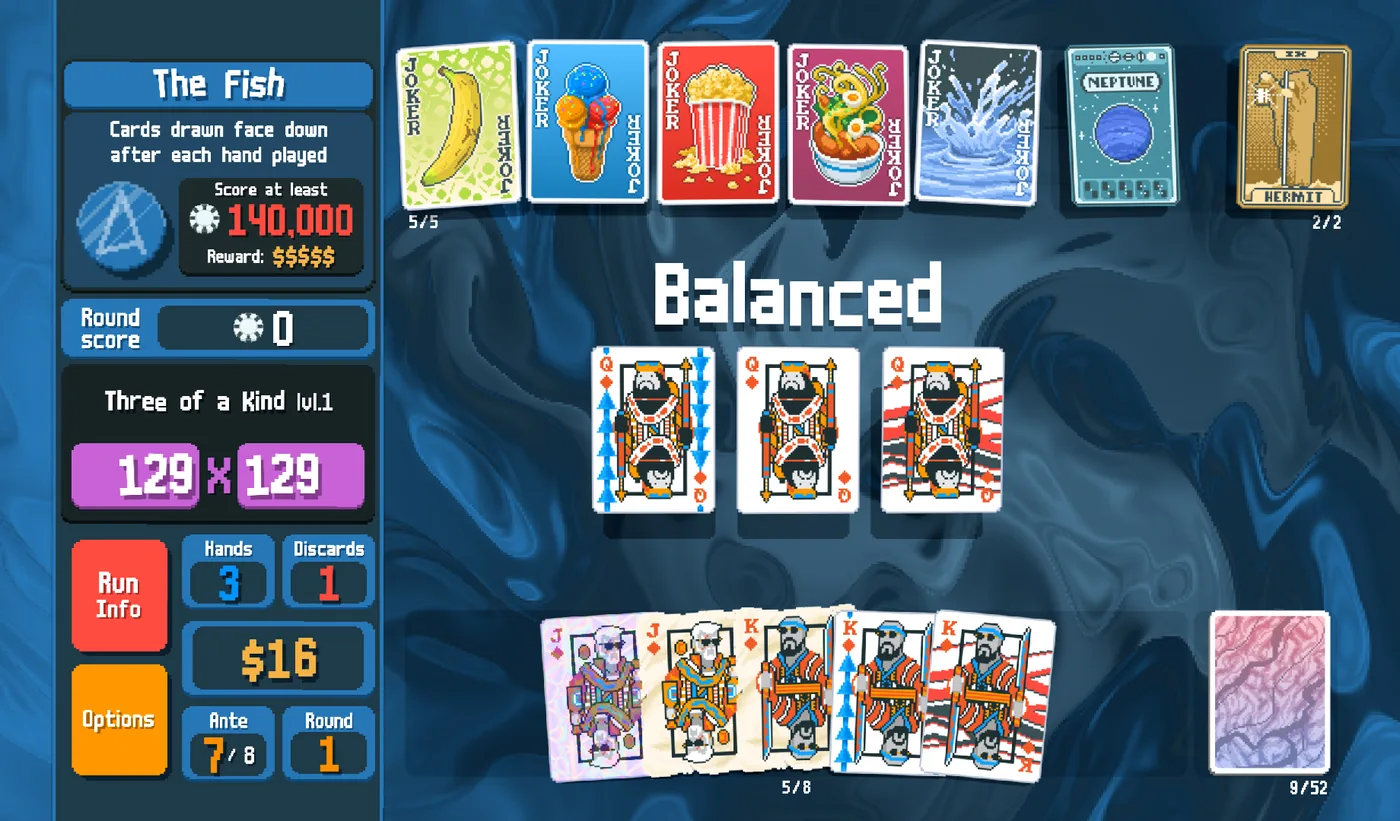
- Protect legality: Keep a fallback hand for The Eye, The Mouth, The Needle and other restrictions.
- Spread power: Do not let one Joker, suit or face-card trigger carry the entire Ante 8 score.
- Recheck order: Copies and retriggers can change after a shop, a shuffle or a debuff.
- Keep a buffer: A bare pass is not a safe pass when the final blind changes the rules.
Final checks
- Read the Boss Blinds Guide - for finisher effects and counters
- Compare Stakes - for stake-specific difficulty and unlock context
Score Targets and Stake Changes
The base score curve in this Balatro ante guide is a planning reference, not a promise that every run uses the same number. The Small Blind is the base target; the Big Blind is usually 1.5 times that value and the Boss Blind is usually 2 times it. Boss modifiers can make a lower number harder, while Plasma Deck changes the scoring target and your build math. Always read the live blind panel before committing a hand.
The table shows the normal base targets for Ante 1-8. Green, Black, Purple, Orange and Gold Stakes can alter costs, scaling or target pressure, so use the Stakes Guide for the exact unlock and modifier context. If you play Plasma Deck, treat the doubled target as a separate constraint and check the dedicated calculator rather than copying a normal-deck estimate.
A useful habit is to record the target you must beat, the score of your safest hand and the score of your high-roll hand. If the safe line clears with room, spend the shop on consistency or economy. If only the high-roll clears, the run needs a reroll, a Planet, a Joker change or a different hand before the next Ante.
Use the curve as a warning
When your safe score is no longer comfortably above the next base target, stop banking on luck and buy consistency before the next Boss.
| Ante | Base Small Blind | Typical Big Blind | Typical Boss Blind |
|---|---|---|---|
| 1 | 300 | 450 | 600 |
| 2 | 800 | 1,200 | 1,600 |
| 3 | 2,000 | 3,000 | 4,000 |
| 4 | 5,000 | 7,500 | 10,000 |
| 5 | 11,000 | 16,500 | 22,000 |
| 6 | 20,000 | 30,000 | 40,000 |
| 7 | 35,000 | 52,500 | 70,000 |
| 8 | 50,000 | 75,000 | 100,000 |
What Changes After Ante 8
Beating Ante 8 wins the standard run, but this Balatro ante guide also covers the transition into Endless Mode. Ante 9 and later do not give you a normal new finish line; they test how long the build can scale while blind requirements grow rapidly. The right Endless plan is different from the right win plan: a reliable Ante 8 clear may be enough to finish, while a high-score run needs exponential scaling, retriggers and carefully protected multipliers.
Do not sacrifice the win to prepare for Endless unless the current run is already safe. A card that adds a small amount of future scaling is weaker than a card that prevents an Ante 8 loss. After the win, remove effects that only solve early consistency and keep the pieces that multiply one another or create repeated triggers.
The exact limit depends on your deck, stake, deck manipulation and the rules of the current version. Treat claims about reaching Ante 16, Ante 20 or higher as examples of an Endless route, not a universal target. The calculator can compare the numbers you enter; it cannot guarantee a future shop or draw.
Build for the next target
- Open the Build Calculator - to compare scaling lines
- Check the Odds Calculator - to measure a fallback draw
Common Ante Planning Mistakes
The most common mistake is treating every Ante as a new puzzle. This Balatro ante guide recommends carrying a plan forward: a scoring floor, a scaling source, a way to shape the deck and a reserve for the next dangerous blind. Replacing all four at once makes the build look exciting but removes the consistency that earned the cash.
Another mistake is spending on the current score while ignoring the next restriction. If the next Boss disables your suit, hand or face cards, a small upgrade to the same dependency may be wasted. Read the preview, count the legal hands and use the shop to buy an exit route. Do not reroll a manageable Boss simply because its name is inconvenient.
Finally, do not confuse a successful high roll with a stable plan. Track the hand you can repeat, the hand you can draw after a bad discard and the score margin after the rule change. That simple record makes each Ante a decision instead of a guess.
- Overfitting one hand: A hand that needs one exact draw can fail before the next shop.
- Ignoring the Boss: The next modifier should shape your purchase before the score target does.
- Chasing Endless too early: Secure the Ante 8 win before trading reliable output for distant scaling.
- Forgetting the calculator inputs: Hand level, order, seals, editions and debuffs change the result.
Balatro Ante FAQ
References and useful resources
About this guide
Balatro Calculator Team
The Balatro Calculator Team builds fan-made score, odds and Joker-order tools for players who want to understand a run before committing a hand, buying a shop card or entering a dangerous blind.
Last updated: November 15, 2026